Need to know how to fold a shirt so you can unpack it crease-free? Button it, lay it face down, fold the sides and sleeves in, then fold up from the hem.
This guide is part of our series on how to care for shirts, and it covers the step after the wash.
| Item | Value |
|---|---|
| Dress shirt buttons before folding | Fastened all the way up, cuffs and collar included |
| Best way to avoid creases in storage | Hang the shirt up |
| Finished dress shirt fold | A neat square with the collar on top |
| Fold for drawer space | Into thirds, so the parcel stands on its end |
| Travel method for T-shirts | Rolled tightly |
These points come from Paul Fredrick and Cleanipedia. Advice can change, so check the source before you rely on it.
Prepare shirts before you fold
Folding keeps a shirt in the state you found it, so start with a dry, smooth garment. Homes & Gardens points out that no amount of expert folding removes wrinkles already in the fabric. Take shirts out as soon as the cycle ends and lay them flat.
Smooth out creases by hand and wait until the shirt is completely dry before folding, as the same Homes & Gardens guide advises. Sorting loads helps too, because lightweight cotton tees dry much quicker than a heavier denim shirt and need less dryer time.
Fold only clean shirts. Our guide on how to wash white shirts covers whites, and this page explains how to remove sweat stains from shirts before they get packed away.
How to fold a dress shirt for a drawer or shelf
This is the classic method for a long-sleeve dress shirt, adapted from Paul Fredrick’s folding guide. It works for drawers, shelves and suitcases alike.
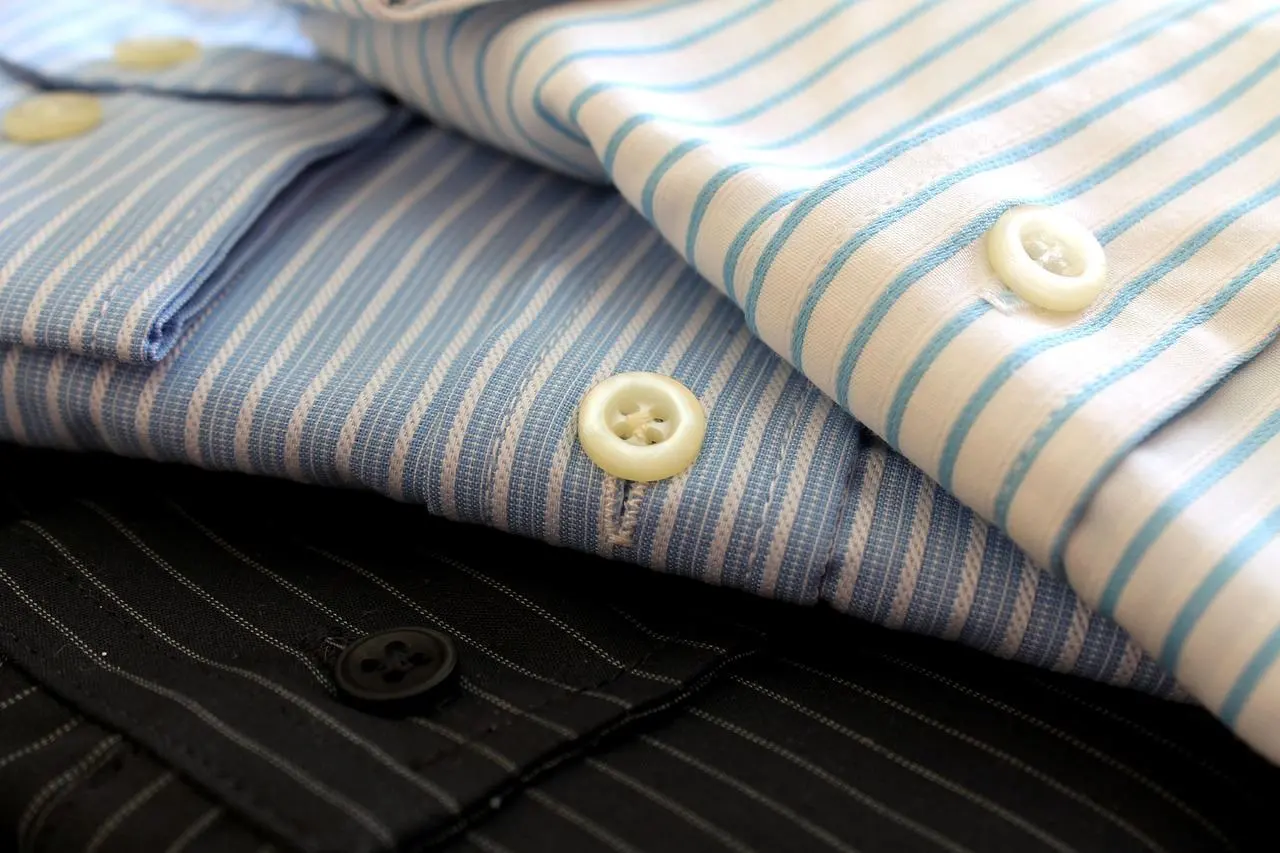
- Button the shirt all the way up, fastening the cuff and collar buttons too.
- Shake out wrinkles and lay the shirt on a clean, flat surface with the buttons facing down.
- Fold one side in over the back, keeping the sleeve extended in line with the other sleeve.
- Fold that sleeve in half over itself, and keep folding until it no longer sticks out.
- Repeat on the other side, so the shirt becomes a long rectangle.
- Pinch the shirttail and shoulder, then pull gently to remove wrinkles.
- Fold the hem up to the shoulder just below the collar. With a longer shirttail, fold the tail up over the back first, then halve the shirt.
The result should be a neat square with the collar on top, ready to stack or pack, according to Paul Fredrick.
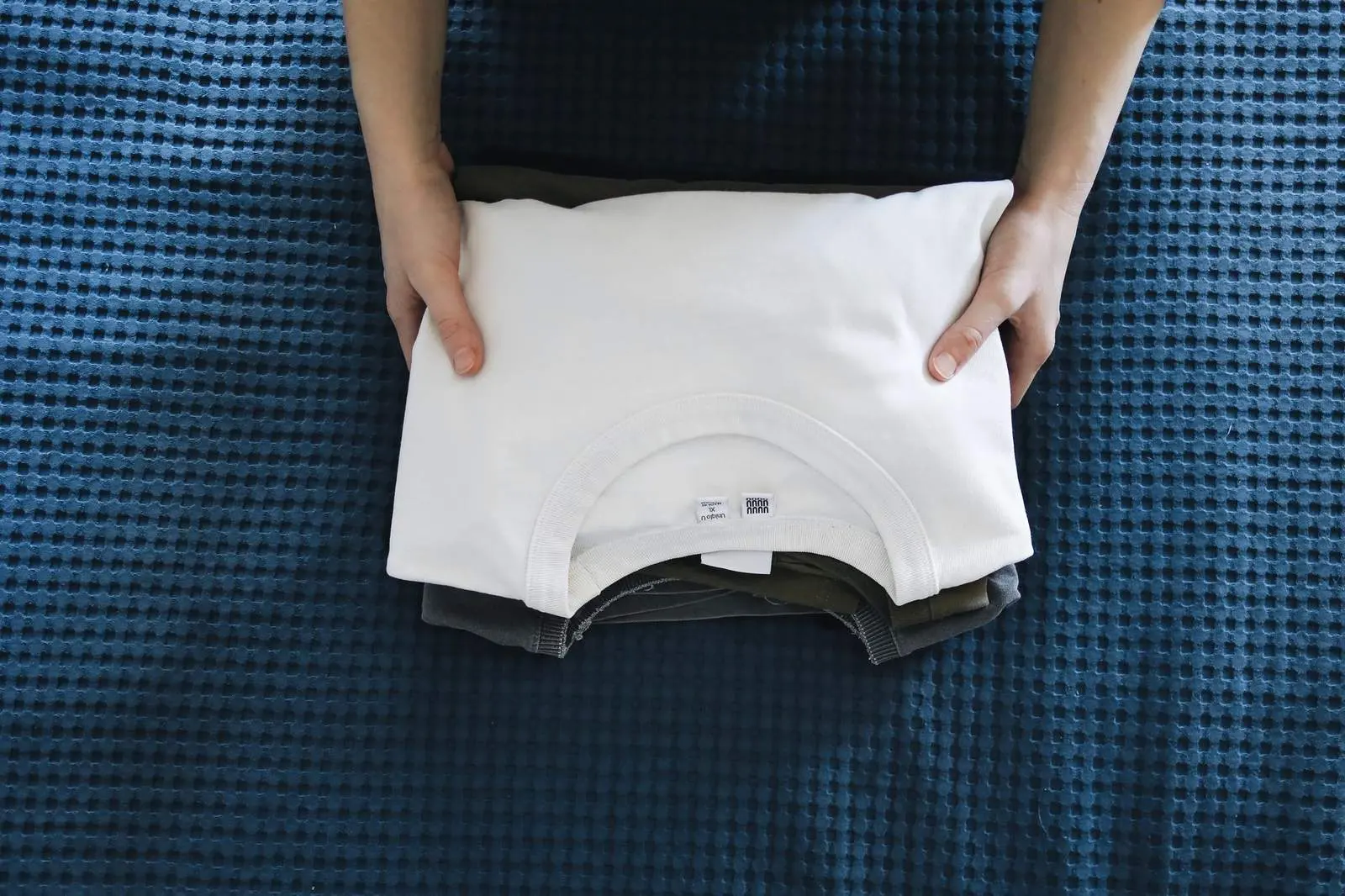
A close variant comes from Cleanipedia. It folds each side into the middle so the two edges meet, then folds the shirt up from the bottom in half or into thirds.
How to fold a T-shirt for drawers
T-shirts have no collar to protect, so the KonMari method suits them well. Cleanipedia says it works better for T-shirts than for dress shirts because of the different collars.
- Lay the tee flat and fold one side, roughly a third of the shirt, inwards across the middle.
- Tuck a long sleeve back so it stays inside the rectangle you are building.
- Do the same on the other side.
- Fold the whole thing in half from top to bottom, then fold it again into thirds.
The little parcel should stand up on its end. That lets you use the vertical space in a drawer or wardrobe.
Homes & Gardens suggests the file fold for the same reason: place folded shirts vertically in a drawer or fabric basket, like papers in a filing cabinet. Using one consistent method across the closet is the best way to maximise space.
How to fold a shirt for a suitcase
For casual tees, Cleanipedia recommends a tight roll that saves space and helps prevent wrinkles. It also warns that the roll needs to be tight to work.
- Lay the T-shirt flat and fold the bottom upwards a few centimetres around the hem, creating a pocket.
- Fold both sides inwards towards the middle, then fold the shirt in half to make a tall, thin rectangle.
- Roll tightly from the top down.
- Tuck the roll into the hem pocket so it keeps its shape in your suitcase.
Cabin Zero offers a similar roll that folds the sleeves inward and turns the tail of the shirt back about 7 cm before rolling.
Dress shirts need different treatment. The Art of Manliness says the Ranger roll suits everyday items like T-shirts, underwear and shorts, but dress shirts that should arrive pristine call for another fold. Use the flat dress-shirt method above instead.
Order matters in the bag as well. Cabin Zero puts clothing of sturdy fabrics at the bottom, followed by shirts of thin or easily wrinkled materials.
Which folding method suits which shirt?
Match the fold to the shirt and where it is going:
- Dress shirt, drawer or shelf: the buttoned, face-down rectangle fold with the collar on top.
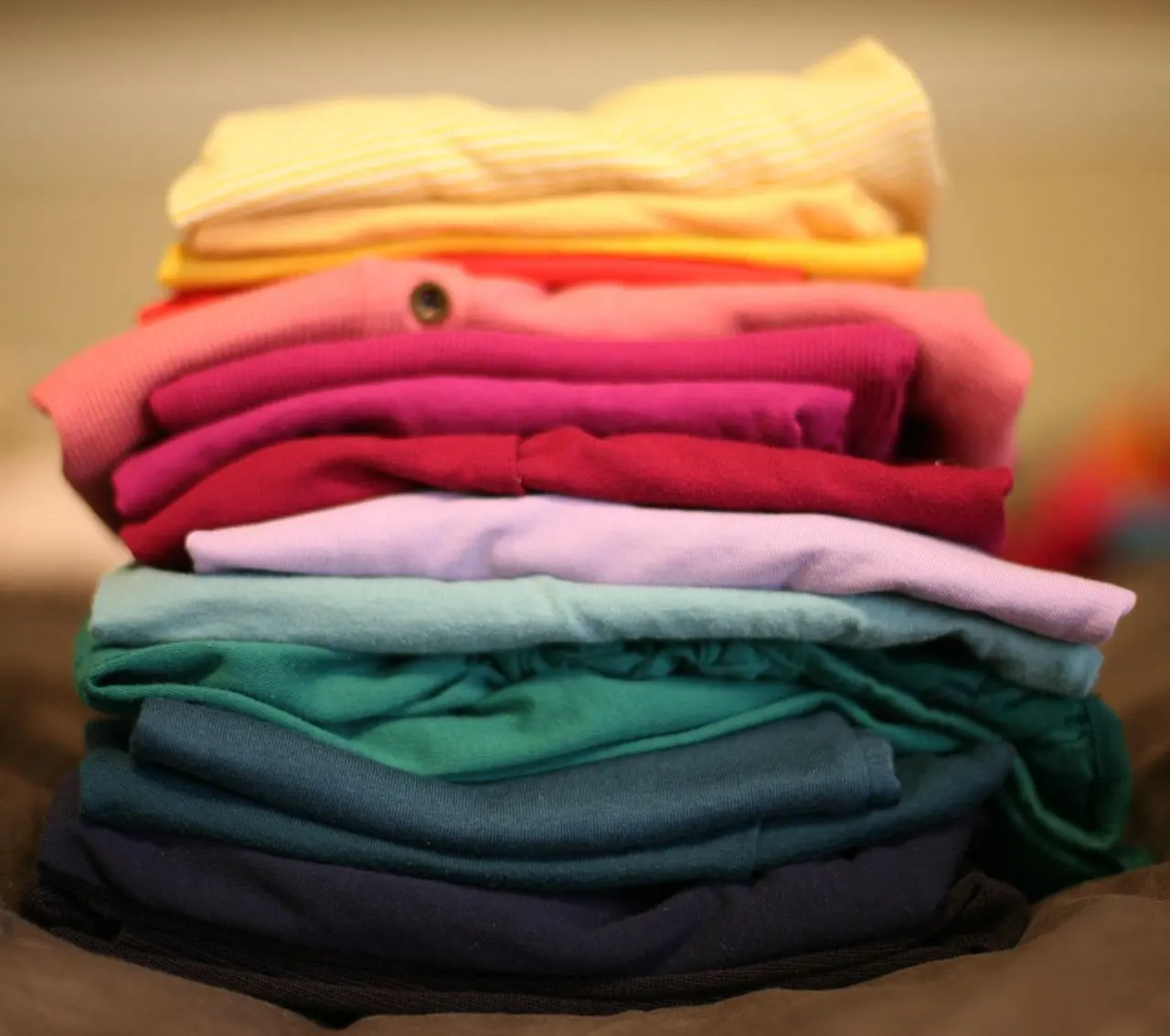
- T-shirt, drawer: the KonMari thirds, stood on end so you can see every shirt.
- T-shirt, suitcase: a tight roll tucked into its hem pocket.
- Dress shirt, suitcase: the flat fold, laid near the top of the bag.
Frequently asked questions
Is it better to hang or fold a dress shirt?
Show answer
Hanging is the crease-free choice, as Cleanipedia notes. Fold when you lack wardrobe space or are packing for a trip.
How do I get creases out after unpacking?
Show answer
Hang the shirt in the bathroom while you take a hot shower. The Art of Manliness says the steam helps release creases and crinkles.
How do I keep a collar from losing its shape in a drawer?
Show answer
Store something inside the collar to hold it open, such as a coiled belt or a balled-up pair of socks, as suggested by Cleanipedia. This also gains a little extra space.
Can I fold a shirt while it is still damp?
Show answer
No. Wait until the shirt is completely dry before folding, according to Homes & Gardens, so creases do not set in.