Stuck on button down vs button up shirt wording while you shop? Here is the short answer: a button-down fastens its collar points with buttons, while “button-up” just means a shirt that buttons up the front.
This guide is part of a broader overview of types of shirts, so you can compare other styles once you have this one settled.
| Item | Value |
|---|---|
| First sold at the Brooks Brothers flagship store | Fall 1900, New York City |
| Designer of the button-down | John E. Brooks |
| Inspiration for the design | English polo players |
| Original collar fastening | Two buttons, one on each collar flap |
| Detachable shirt collar abandoned by the fashion industry | About 1930 |
These figures come from the EBSCO Research Starters entry on Brooks Brothers and the button-down shirt. Historical summaries can change or disagree on dates, so check the source before you rely on them.
What button-down and button-up each mean
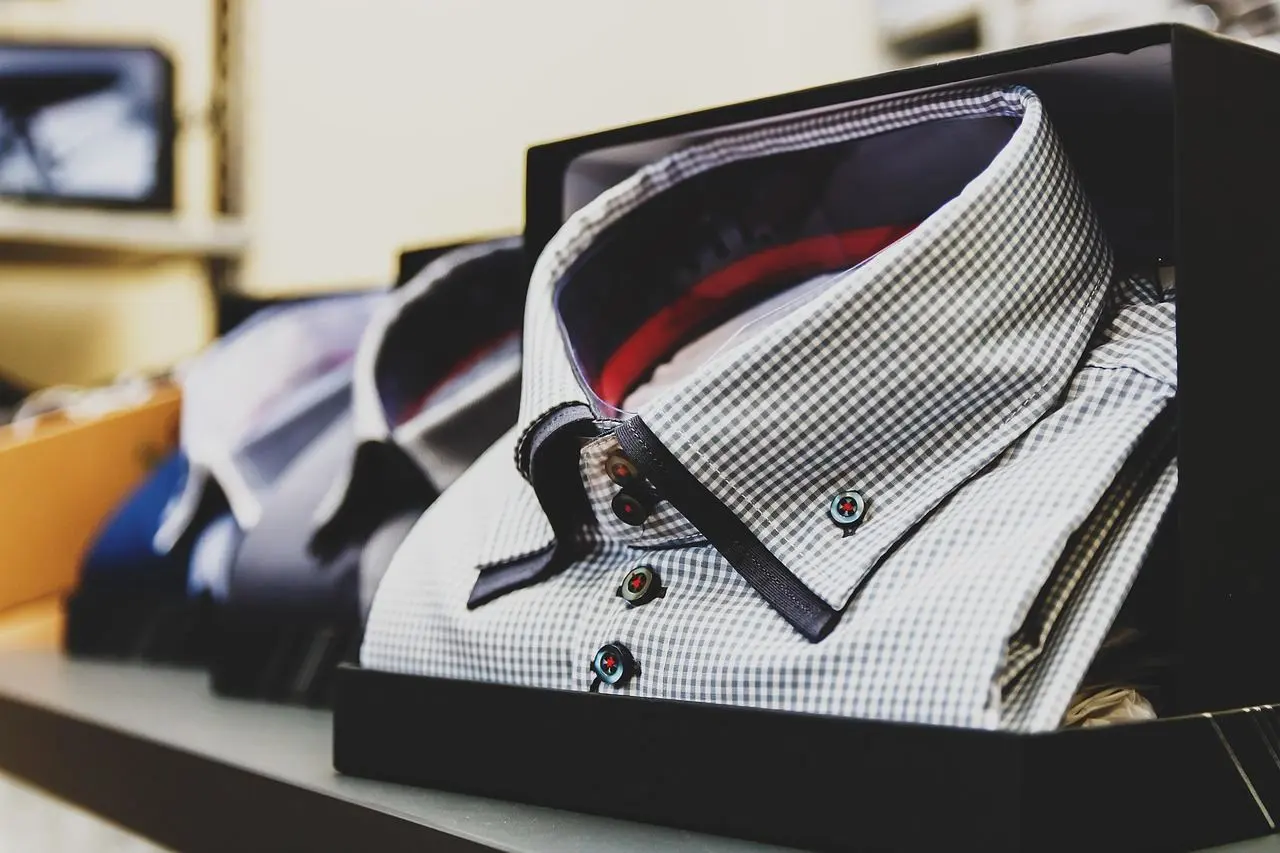
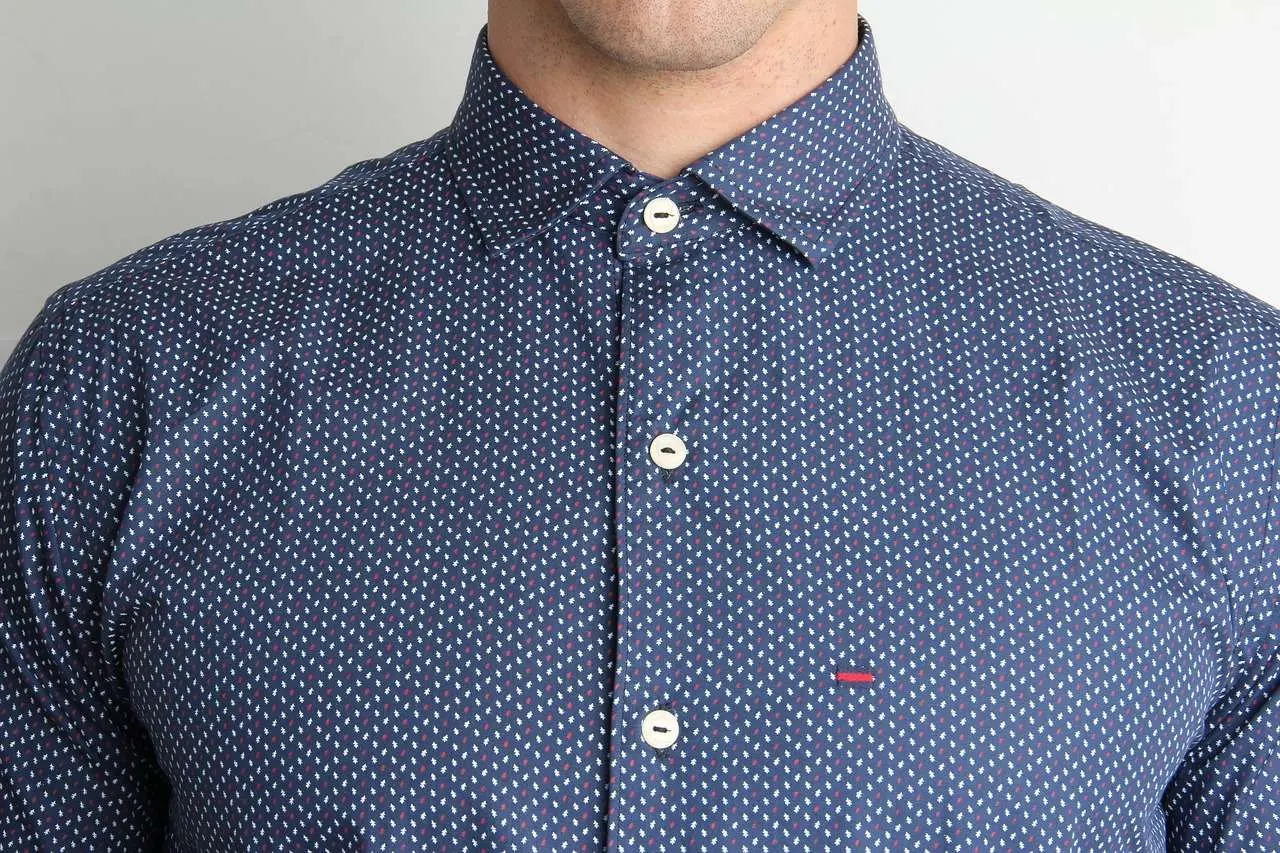
A button-down shirt has a collar whose points are held to the shirt with small buttons. In the original design described by the source, an attached, narrow rolled collar carried a button at the top of the shirt and two buttons, one on each side, to hold down the flaps of the collar. The EBSCO entry records that detail.
Button-up is the looser, everyday term. It usually describes any shirt that fastens down the front with buttons, so a button-down is one kind of button-up.
That is why the two words cause so much confusion. The question is rarely “which is right?” and more often “do the collar points have buttons?”
Where did the button-down shirt come from?
According to EBSCO Research Starters, Brooks Brothers introduced the button-down shirt in 1900. The design came from John E. Brooks, the founder’s grandson, who watched English polo players during a trip to England.
The players used buttons to secure the points of their collars, keeping them from flapping in the wind. Brooks brought the idea home and adapted it for American men.
The same entry also lists 1896 in its summary box, while its narrative says the shirt was first sold in New York City in the fall of 1900. If you quote a date, 1900 is the better-supported sale date in that text.
The first version was made of cotton, in a number of colors and colored stripes. That already looks a lot like the casual-smart shirts you see today.
Why did the button-down catch on?
Shirts of the period were not built for comfort, and the button-down offered a practical alternative. The source gives several reasons it won people over:
- It was more comfortable and less restricting than its predecessors, thanks to an attached, unstarched collar.
- It fitted with ease under a suit coat.
- It held a necktie more securely in place, which suited office-type work.
It also gained famous wearers. The EBSCO summary names Presidents Theodore Roosevelt and Woodrow Wilson among its customers, and says the shirt later contributed to the Ivy League style.
It was not the only choice at first. Around the time the button-down appeared, most collars were starched and detachable, and the fashion industry did not abandon the detachable collar until about 1930, as the same source explains.
How to tell the two apart in a shop
Skip the label and check the shirt itself. A quick routine works well:
- Look at the collar points. Small buttons that fasten them down mean a button-down.
- Check how the collar sits. A soft, rolled collar that stays put without a pin or stay is typical of the button-down idea.
- Count the front buttons. Nearly every dress or casual shirt has them, so this tells you little on its own.
- Read the product description for the collar name, since retailers often say “button-down collar” outright.
If collar shape is what you are really sorting out, the guide to types of shirt collars covers the other options beside the buttoned one.
Matching the shirt to your outfit
Choose a button-down when you want a collar that stays neat without fuss. Because the buttons keep the points from lifting, it works with or without a tie, and the source notes that it held a necktie securely.
Choose a button-up with a freer collar when you want a different look at the neckline. Both can look sharp, so the better pick depends on the outfit and the occasion.
Fabric matters as much as the collar. If you are weighing texture and weight next, the comparison of chambray vs denim shirt options is a useful follow-up.
Frequently asked questions
Is a button-down the same as a button-up?
Show answer
Not exactly. Every button-down is a button-up, but only some button-ups have collar points that fasten down.
Who created the button-down shirt?
Show answer
John E. Brooks, grandson of the Brooks Brothers founder, designed it after noticing what English polo players wore, according to EBSCO Research Starters.
Why do the collar points have buttons at all?
Show answer
The idea was to stop loose collar points from moving about. Polo players had done this to keep their collars steady while they rode.
Can you wear a button-down to the office?
Show answer
Yes. The source says early wearers found it practical for office-type work, partly because it sat well under a suit coat and kept a tie in place.